
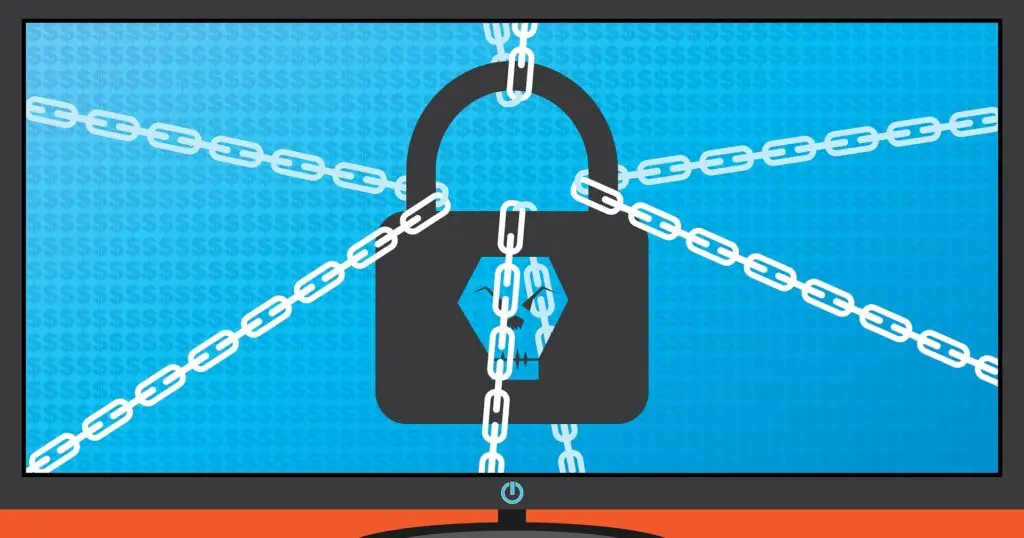
Ransomware is a type of malware that prevents users from accessing their system or personal files until a ransom is paid. It typically spreads through malicious websites, email attachments, or by exploiting security vulnerabilities in a system. Once installed, the ransomware encrypts all of the user’s data and displays a message demanding a payment in order to regain access.
To understand how ransomware works, it is important to know a few technical concepts. Ransomware is built using cryptography, which is the process of encoding and decoding information. Encryption is the process of encoding information such that it cannot be read without the use of a key. Decryption is the process of decoding encrypted information using the same key.
Ransomware uses encryption to prevent users from accessing their data. When the ransomware is installed, it scans the user’s system and encrypts all of their data, making it unreadable. It then displays a message demanding a ransom in exchange for the key to decrypt the data. The user is given a specific amount of time to pay the ransom. If they do not pay the ransom within the given timeframe, the data is permanently encrypted and lost. Ransomware is a serious security threat and can have devastating effects on a system. To protect yourself from this type of malware, it is important to keep your system up to date with the latest security patches and use a reliable anti-virus and anti-malware program. Additionally, it is important to be wary of suspicious emails or websites that may contain malicious links or downloads.
Examples of ransomware include CryptoLocker, WannaCry, Petya, Locky, and Cerber.
Ransomware poses a serious threat to small businesses. Small businesses are particularly vulnerable to ransomware attacks due to their limited resources and lack of experience in cybersecurity. If a small business is the target of a ransomware attack, the consequences can be devastating. The attackers may demand a ransom in exchange for the decryption key, which can be expensive and time consuming to pay. Additionally, the data that has been encrypted may be lost forever if the ransom is not paid in time.
Ransomware can also cause long-term damage by disrupting business operations. If the attack is successful, the business may be unable to access important files or applications, which can lead to a loss of customers, revenue, and reputation.
In order to protect their businesses from ransomware attacks, small business owners should take steps to ensure their systems are secure. This includes regularly updating software and systems, using strong passwords, and training employees on cyber security best practices. Additionally, it is important to have a secure backup of all data in case of an attack.